React / TypeScript / Supabase / Gemini / Google Calendar
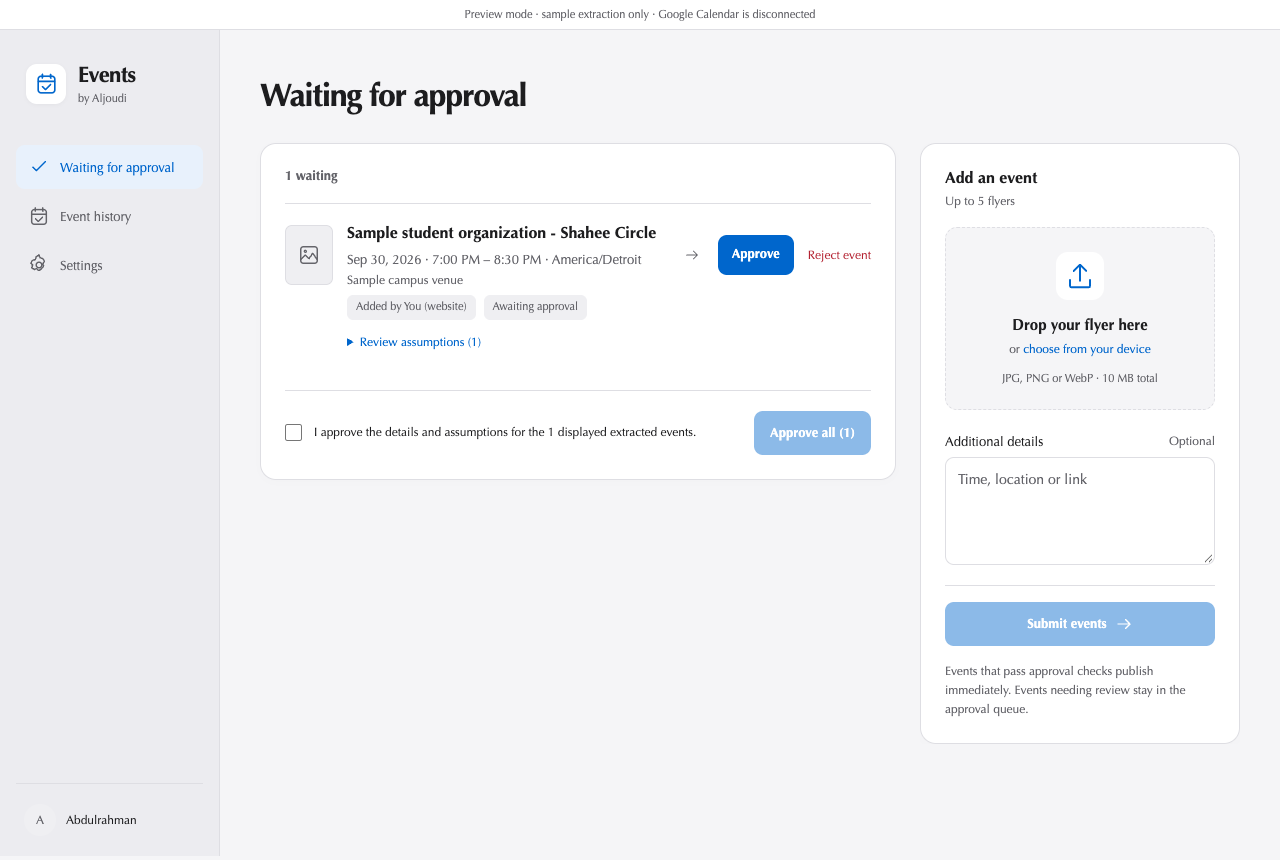
The hard part is the handoff from uncertain extraction to a real calendar write. Drafts stay reviewable, extraction warnings are surfaced, and publishing is gated on approval. The iPhone Shortcut uses the same workflow.
02 / Small tool, everyday utilityPublic on GitHub
The right hint. Right where you type.
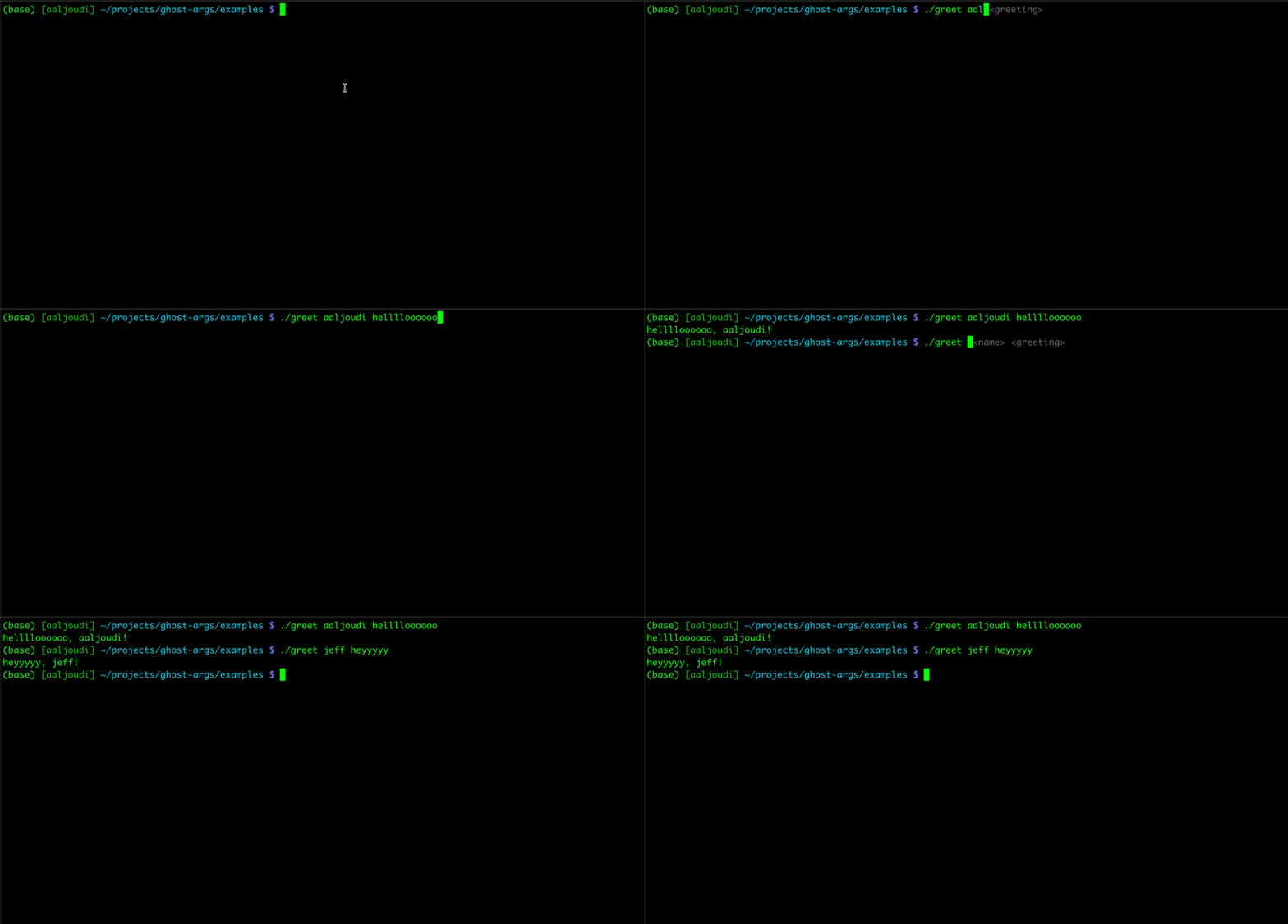
Inline argument hints for Zsh scripts, drawn from their usage comments. Less context switching between your terminal and documentation.
Ghost Args · Actual terminal demo
Open on GitHub ↗Public repository · github.com/aaljoudi/ghost-args
How I built it +
Zsh / Usage comments / Inline argument hints
The script’s own usage comment provides the hints. The tool brings that information into the command line, where it’s useful, rather than asking you to maintain a second set of documentation. The demo shows the tool running in a real Zsh terminal.
03 / A quieter kind of softwareLive app
A little space to focus.
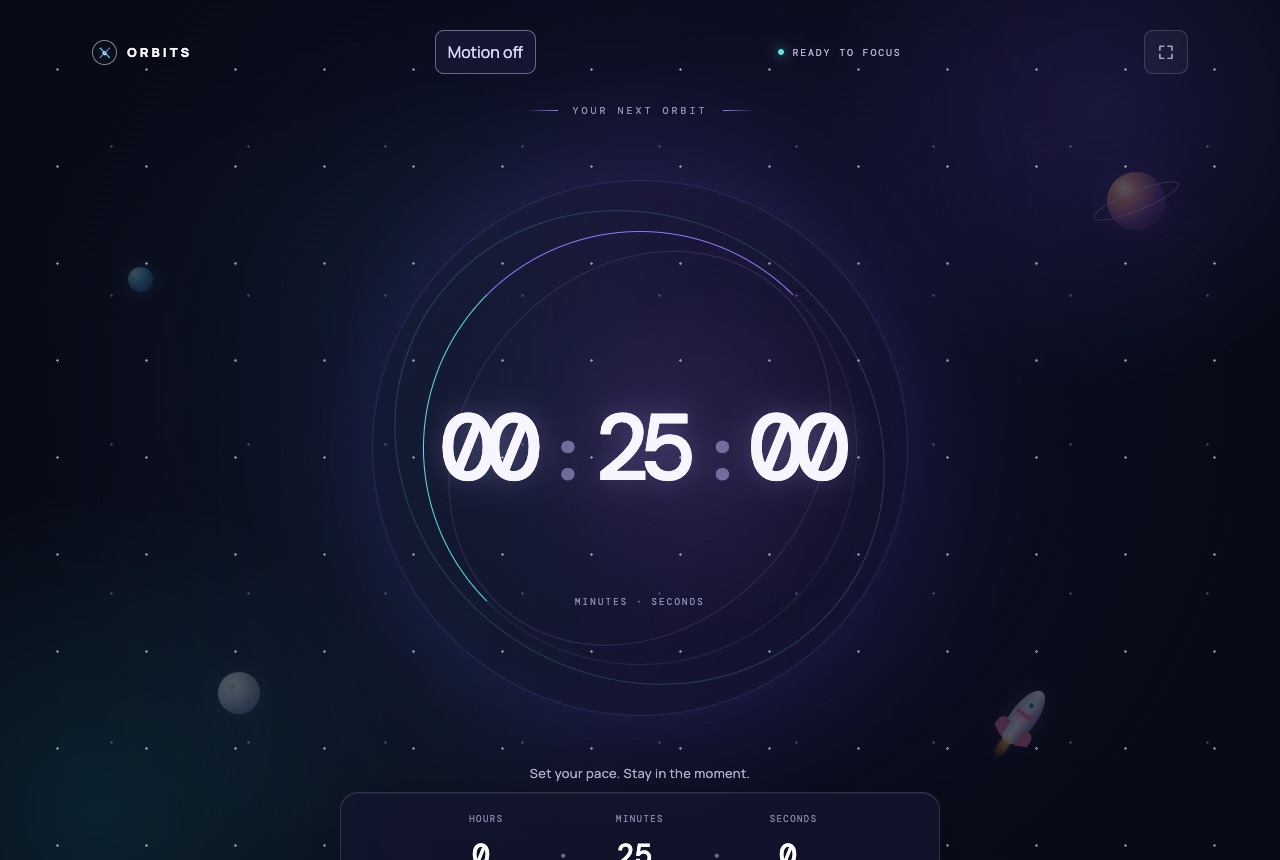
A visual focus timer with adjustable duration, pause, reset, and an audible finish. Simple controls, a small moment of calm.
Real timer
25:00
Runs here. No account needed.
Actual interface · Sample data
The actual Orbits app · Sound only plays when a timer finishes.
Timer state drives the controls, visual progress, and completion feedback. Motion can be switched off, and the interface respects reduced-motion preferences. This embedded version uses the same app as the full experience.
04 / Connecting the piecesPrivate app
Your day. In one place.
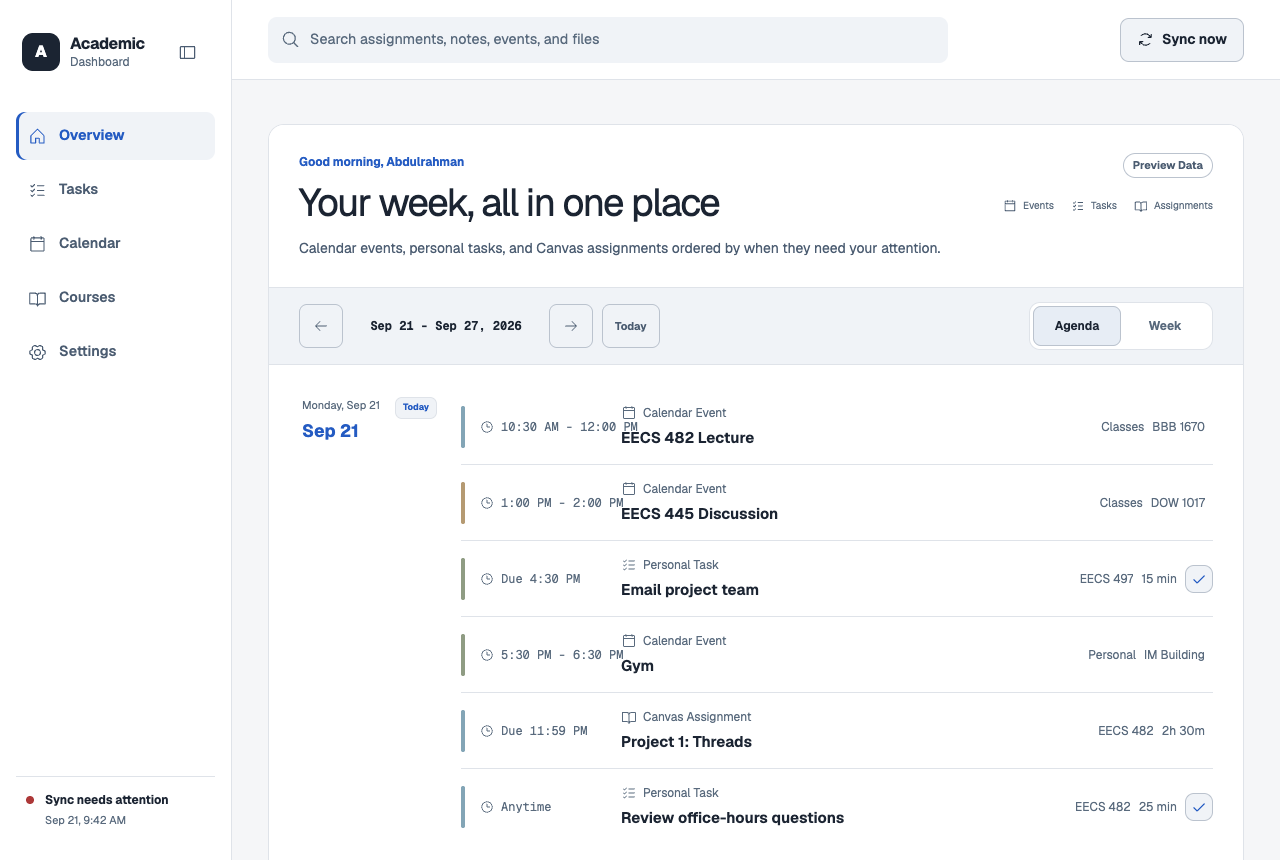
Canvas assignments, course schedules, Apple Calendar, and Reminders in a private workspace. Built around how I actually plan my day.
Different sources have different boundaries. Canvas refreshes through the authenticated browser; a paired Mac contributes Calendar and Reminders. The sync preserves that separation while presenting the results together. Captures use sample academic data.
05 / Research at NJITPublication
From an idea to a photonic circuit.
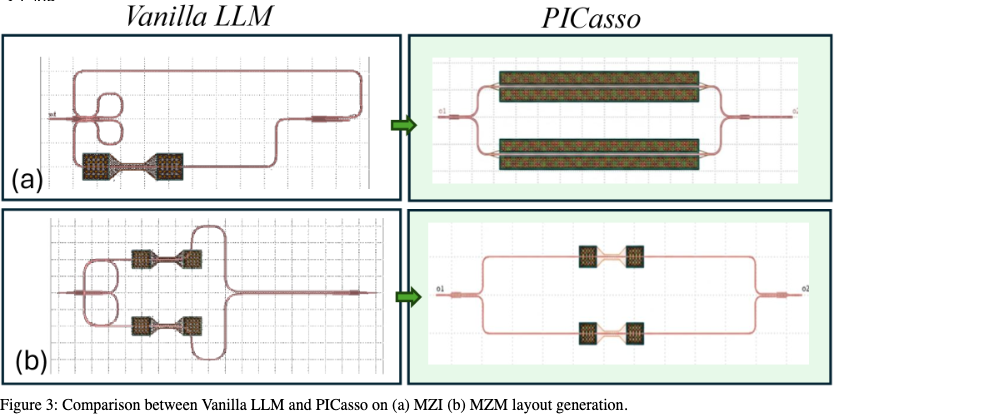
Research I contributed to at NJIT’s ACAD Lab: generating, simulating, and optimizing silicon photonic devices with PICasso.
PICasso connects generation, placement, routing, simulation, and optimization in a design loop. My research at the ACAD Lab involved generating, simulating, and optimizing photonic circuits. The figures shown here come from the published paper.
06 / Making evidence visiblePreview
Follow the evidence. See the uncertainty.
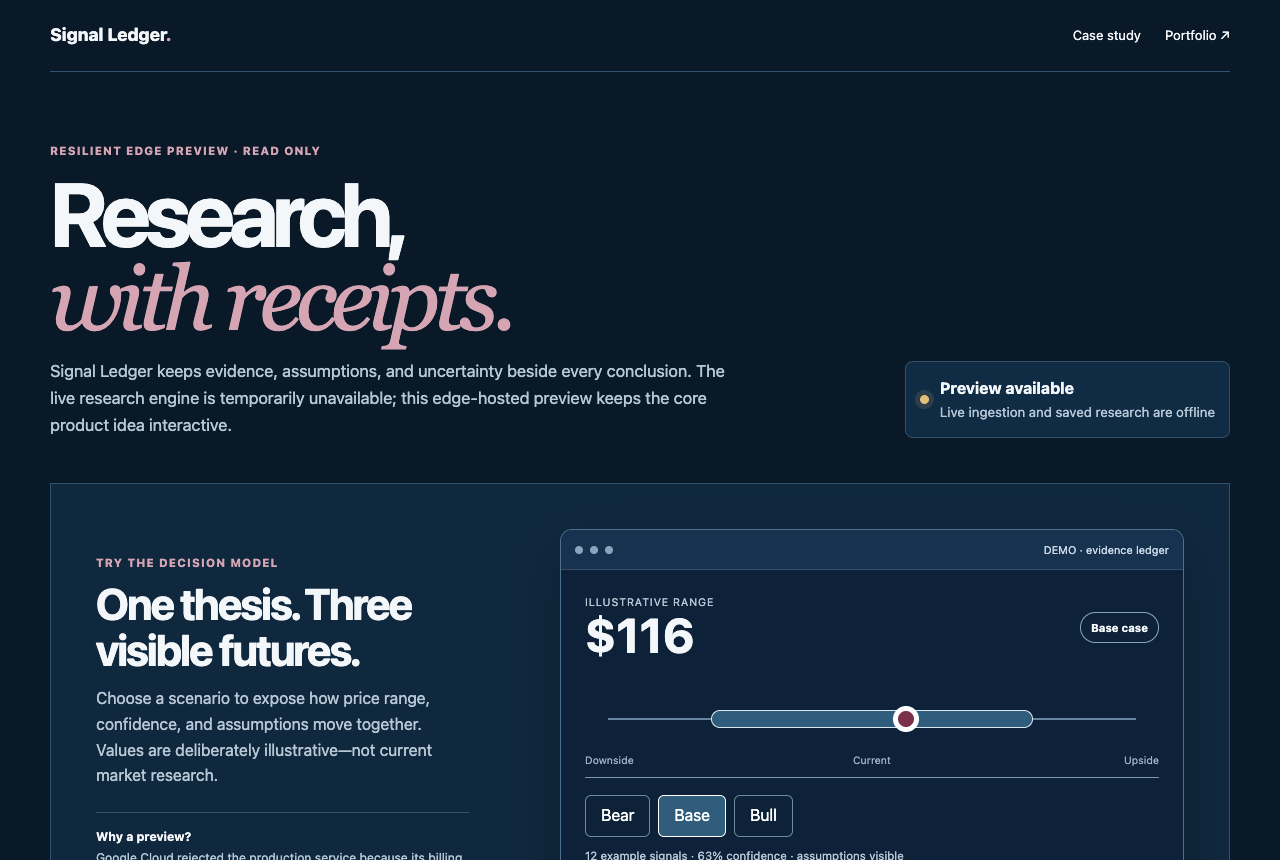
Public-market research with cited evidence and forecast ranges. Built to make the reasoning behind a research view easier to inspect.
Actual interface · Sample data
Illustrative preview · The research backend is currently offline.
The interface brings cited evidence and scenario ranges into the same research view. Keeping source material and uncertainty visible is part of the product’s design. The deployed preview uses illustrative values; it does not represent live research output.